Exploring the Foundations of Object-Oriented Programming Languages
Alok Kumar - SEO Executive at Kodehash Technologies
Alok Kumar is a dedicated and results-driven SEO Executive currently contributing his expertise to the dynamic team at Kodehash Technologies. With a passion for digital marketing and a keen understanding of search engine optimization strategies, Alok plays a crucial role in enhancing online visibility and driving organic traffic for clients.
Professional Background: Alok brings a wealth of experience in the field of SEO, having honed his skills through hands-on work and staying abreast of the latest industry trends. His journey in the realm of digital marketing has been marked by a commitment to delivering tangible results for clients across various industries.
Expertise: As an SEO Executive, Alok Kumar excels in conducting comprehensive keyword research, on-page and off-page optimization, and implementing effective link-building strategies. His analytical mindset allows him to interpret data and make informed decisions, ensuring optimal performance in search engine rankings.
Key Contributions at Kodehash Technologies: In his role at Kodehash Technologies, Alok has been instrumental in developing and executing successful SEO campaigns that have significantly improved the online presence and visibility of clients. His strategic approach to SEO aligns with the company's commitment to delivering top-notch digital solutions.
Education: Alok holds a degree in Computer Science & Engineering from [Uttrakhand technical University. His academic background, combined with a passion for continuous learning, equips him with a well-rounded understanding of the ever-evolving landscape of digital marketing.
Personal Attributes: Beyond his professional accomplishments, Alok is known for his collaborative spirit, strong work ethic, and proactive approach to problem-solving. He thrives in dynamic environments and is always eager to take on new challenges that push the boundaries of his skill set.
Connect with Alok Kumar:
- Email: alok.k@kodehash.com
Alok Kumar's commitment to staying ahead of the curve in SEO practices makes him an invaluable asset to the Kodehash Technologies team. His combination of technical expertise and a strategic mindset ensures that clients receive high-quality, customized solutions to meet their digital marketing objectives.
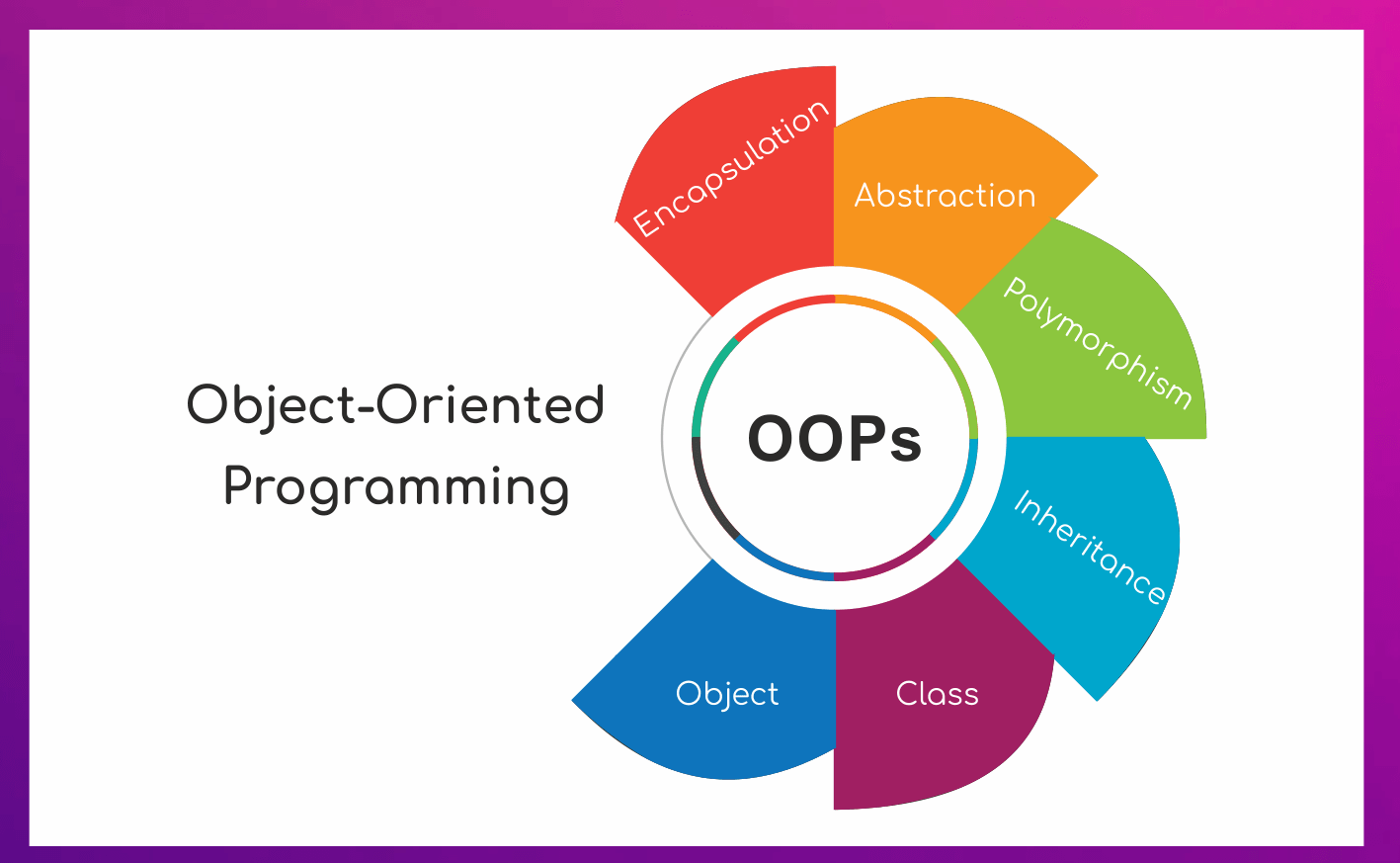
Object-Oriented Programming (OOP) is a fundamental programming paradigm that has revolutionized software development by introducing powerful concepts and principles for structuring code. In this article, we will embark on a journey to explore the foundational concepts of Object-Oriented Programming languages, understanding how they shape the way we design and build software systems.
1. Understanding Objects and Classes:
At the heart of Object-Oriented Programming lies the concept of objects and classes:
Objects are instances of classes that encapsulate data (attributes) and behaviors (methods).
Classes serve as blueprints or templates for creating objects, defining their structure and behavior.
2. Encapsulation:
Encapsulation is a key principle of Object-Oriented Programming that emphasizes bundling data and methods within a class, hiding the internal implementation details from the outside world:
Encapsulation promotes data abstraction, allowing objects to interact with each other through well-defined interfaces.
Access modifiers such as public, private, and protected control the visibility and accessibility of class members.
3. Inheritance:
Inheritance facilitates code reuse and promotes hierarchical relationships between classes:
Subclasses inherit properties and methods from their superclass, enabling them to extend or override the behavior of the superclass.
Inheritance promotes the creation of hierarchical class structures, where subclasses specialize or refine the behavior of their superclass.
4. Polymorphism:
Polymorphism allows objects to exhibit different behaviors based on their underlying type or class:
Polymorphism can be achieved through method overriding (runtime polymorphism) or method overloading (compile-time polymorphism).
Polymorphism enhances code flexibility and extensibility, allowing for more modular and adaptable software designs.
5. Abstraction:
Abstraction involves modeling real-world entities as simplified, essential representations in code:
Abstraction focuses on capturing the essential properties and behaviors of objects while hiding irrelevant details.
Abstract classes and interfaces provide a mechanism for defining common behaviors and contracts that concrete classes must implement.
6. Message Passing:
Message passing is a fundamental mechanism in Object-Oriented Programming for objects to communicate and collaborate with each other:
Objects interact by sending messages to each other, triggering method invocations and responses.
Message passing promotes loose coupling and encapsulation, as objects are only aware of each other's interfaces, not their internal implementations.
7. Design Patterns:
Design patterns are reusable solutions to common design problems in software development:
Object-Oriented Programming languages often leverage design patterns to address recurring challenges and promote best practices.
Examples of design patterns include Factory, Singleton, Observer, and Strategy patterns, each serving specific purposes and use cases.
Conclusion:
Understanding the foundations of Object-Oriented Programming languages is essential for mastering software development and building robust, maintainable, and scalable software systems. By grasping the core concepts of objects, classes, encapsulation, inheritance, polymorphism, abstraction, message passing, and design patterns, developers can leverage the power of Object-Oriented Programming to create elegant and efficient solutions to complex problems. As we continue to explore and innovate in the realm of software development, the foundational principles of Object-Oriented Programming will continue to guide us in our quest to build better software for the future.